SAVING'S
In the world of finance, savings is the portion of your income that you do not spend on current expenses.1 It is money "parked" in a safe, easily accessible place to be used for future needs.2
While investing is about growing your wealth (high risk/reward), saving is about protecting your wealth and ensuring it’s there when you need it (low risk/high safety).3
1. Why Savings is Your "Financial Foundation"
Savings provide the peace of mind needed to take risks elsewhere in your life.4
The Emergency Fund: This is the most important "good" of saving. Having 3–6 months of expenses in a savings account ensures that a job loss or medical emergency doesn't become a financial disaster.5
Short-Term Goals: If you want to buy a laptop next month or go on a trip in six months, saving is better than investing because you don't want the market to crash right before you need the cash.6
Avoiding Debt: People with savings don't need to use high-interest credit cards for unexpected bills, saving them thousands in interest over time.7
2. Common Ways to Save
Where you put your savings depends on when you need the money:8
| Type of Account | Best For... | Key Feature |
| Regular Savings | Every-day emergencies | Highly liquid; you can withdraw cash at any ATM instantly. |
| High-Yield Savings | Specific goals (e.g., a wedding) | Offers a higher interest rate (often 4%+) but might be online-only. |
| Fixed Deposits / CDs | Money you don't need for 1 year | Higher interest, but you are penalized if you take the money out early. |
| Money Market Accounts | Large cash reserves | A "hybrid" between a checking and savings account with higher rates. |
3. The "Bad" Side of Just Saving
While saving is safe, it has one major enemy: Inflation.9
Losing Purchasing Power: If your savings account pays 2% interest but prices for food and rent are rising by 6% (inflation), your money is technically losing value every year.10
The Opportunity Cost: If you keep all your money in a savings account for 30 years, you will have much less than if you had invested some of it in the stock market or mutual funds.
4. How to Start Saving (The 50/30/20 Rule)
A popular way to manage your income is the 50/30/20 rule:11
50% for Needs (Rent, groceries, utilities).12
30% for Wants (Dining out, movies, hobbies).13
20% for Savings & Debt Repayment.14
Pro Tip: The secret to successful saving is Automation.15 Set your bank account to automatically move a small amount to your savings account the day you get paid.16 If you never see the money in your "spending" account, you won't miss it
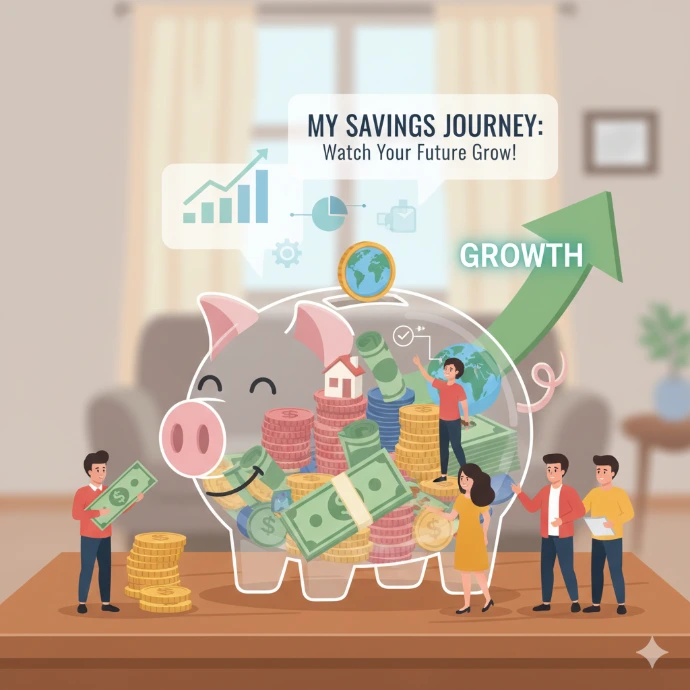
HOW SAVING'S IS GOOD
1. It Creates "Breathing Room" (Mental Health)
The biggest benefit of saving isn't the interest you earn; it's the stress you lose.
Financial Resilience: Having an "Emergency Fund" (3–6 months of expenses) turns a major crisis, like a job loss or a medical bill, into a manageable "inconvenience."
Reduced Anxiety: Research shows that "consistent savers" are significantly happier and feel more in control of their lives than those living paycheck-to-paycheck.
Confidence: Knowing you have cash in the bank gives you the courage to ask for a raise, leave a toxic job, or start a new hobby.
2. It Saves You Money (Debt Prevention)
Ironically, having money saved is the best way to stop losing money.
Avoiding the "Debt Trap": When an emergency happens and you don't have savings, you are forced to use credit cards with 20%+ interest. By using your own savings instead, you save yourself from paying hundreds in interest to a bank.
Cash Discounts: Having savings allows you to buy things in bulk or pay for a full year of insurance upfront, which usually comes with a discount compared to monthly payments.
3. It Buys You Time and Choices
Money is essentially "stored time."
Opportunity Fund: Savings aren't just for emergencies; they are for opportunities. If a great business idea comes along or a dream house goes on sale, your savings allow you to act quickly.
Freedom of Choice: If you hate your current situation, savings provide the "runway" to quit and take a few months to find something better. Without savings, you are a "slave" to your next paycheck.
The "Good" vs. "Bad" of Saving
| Feature | Why it’s Good | The Catch |
| Safety | Your principal amount is guaranteed (usually insured by the government). | Inflation: Over many years, the "buying power" of your cash may drop. |
| Liquidity | You can get your money instantly at an ATM. | Low Returns: Savings accounts pay very little interest compared to stocks. |
| Habit | Teaches discipline and self-control. | Over-Saving: Saving too much and never investing can slow down your long-term wealth. |
How to Make Saving "Great"
To get the most "good" out of your savings, experts suggest separating your buckets:
The Boring Bucket: A standard savings account for your Emergency Fund (Safety first!).
The Goal Bucket: A high-yield savings account for things like a vacation or a new phone.
The Wealth Bucket: This is where you move money out of savings and into Investments (like the Mutual Funds we discussed) once your emergency fund is full.
One Final Benefit: Saving is a "non-negotiable" bill you pay to your future self. Every dollar saved is a gift you are sending forward in time.
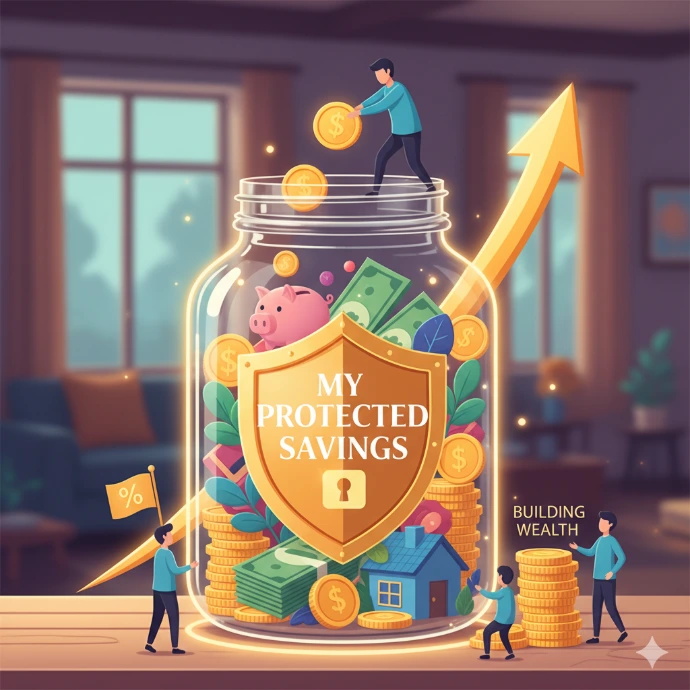
HOW SAVING'S WORKS
1. How It Works for You: The "Reward"
When you put money into a savings account, you aren't just storing it; you are essentially lending it to the bank. As a "thank you," the bank pays you interest.
The Principal: This is the original amount you deposit (e.g., $1,000).
The APY (Annual Percentage Yield): This is the interest rate. If your APY is 4%, the bank pays you $40 over a year.
Compounding (The Secret Sauce): Most banks compound interest daily or monthly. This means that in Month 2, you earn interest on your original $1,000 plus the interest you earned in Month 1. Over time, your money begins to grow exponentially.
2. How It Works for the Bank: The "Business"
Banks don't just leave your money sitting in a vault. They use a system called Fractional Reserve Banking.
Lending: The bank takes your $1,000 and keeps a small fraction (usually 10%) as a "reserve" in case you want to withdraw it. They then lend the remaining $900 to someone else for a mortgage, a car loan, or a business loan.
The Spread: The bank charges that borrower a high interest rate (e.g., 7%) and pays you a low interest rate (e.g., 1%). The 6% difference is how the bank pays its employees, keeps the lights on, and makes a profit.
3. The 3 Pillars of a Good Savings Plan
To make saving work effectively, you should follow this hierarchy:
| Step | Name | Purpose |
| 1 | The Emergency Fund | 3–6 months of cash to cover bills if you lose your job. Safety first. |
| 2 | Sinking Funds | Money set aside for known future costs (e.g., a new car or a holiday). |
| 3 | Automation | Setting your bank to move $100 to savings the moment your paycheck arrives. |
4. Why Your Money is Safe
In most modern economies, your savings are protected by the government.
USA: The FDIC insures your deposits up to $250,000.
India: The DICGC insures your deposits up to ₹5 Lakh.
UK: The FSCS protects you up to £85,000.
Even if the bank goes bankrupt, the government ensures you get your money back.
Key Rule: Savings is for protection and liquidity (getting cash fast). Investing is for wealth building. You should always finish your "Savings" goals before you start your "Investing" goals.
HOW SAVING'S ARE BAD
1. The "Invisible Thief": Inflation
The biggest danger to savings is Inflation (the rising cost of goods and services).
Losing Value: If your savings account pays you 3% interest but the cost of living (milk, rent, gas) is rising by 6%, you are technically losing 3% of your wealth every year.
Purchasing Power: Your bank balance stays the same, but the amount of stuff that money can buy shrinks. Over 20 years, inflation can cut the value of your cash in half.
2. Low Opportunity Cost
By keeping all your money in a "safe" savings account, you miss out on the much higher returns of the stock market or real estate.
The Growth Gap: Historically, savings accounts return 1–4%, while the stock market averages around 10%.
The Cost of Safety: If you save $500 a month for 30 years in a bank, you might end up with $250,000. If you invested that same money in a mutual fund, you could have over $1,000,000. By "playing it safe," you are actually losing hundreds of thousands of dollars.
3. High Taxation
In many countries, the interest you earn from a savings account is taxed as Income, which usually has a higher tax rate than Capital Gains (the profit from selling stocks or property).
Double Hit: You lose value to inflation, and then the government takes a piece of the tiny interest you did manage to earn.
4. Psychological Stagnation
Saving is a "defensive" move. If you focus only on saving every penny, you might develop a scarcity mindset.
Fear of Spending: People who over-save often become too afraid to spend money on things that improve their lives, such as education, health, or small luxuries.
Missing Out on Life: You might save so much for a future retirement that you forget to enjoy your youth.
Comparison: When Saving is Bad vs. Good
| Scenario | Saving is GOOD | Saving is BAD |
| Timeframe | Short-term (under 3 years). | Long-term (over 10 years). |
| Goal | Emergency fund or a house deposit. | Retirement or generational wealth. |
| Amount | 3–6 months of expenses. | Keeping 100% of your net worth in cash. |
| Economy | During high-interest periods. | During periods of high inflation. |
How to Fix "Bad" Saving
The goal is to find the "Sweet Spot":
Fill your bucket: Save until you have a solid emergency fund.
Stop saving: Once that bucket is full, stop putting money in the bank.
Start investing: Redirect all "extra" money into assets like mutual funds, gold, or stocks that beat inflation.
Summary: Saving is like a life jacket. It's great to have one when you're on a boat (an emergency), but if you try to wear it while walking through a desert (building long-term wealth), it will only slow you down and make you sweat.