FINANCE
The Three Main Pillars of Finance
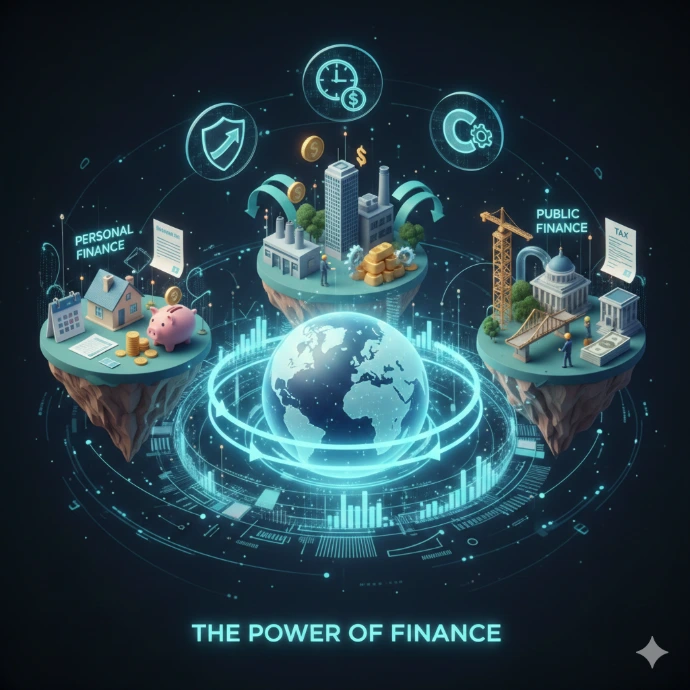
The field is traditionally divided into three categories based on who is managing the money:4
1. Personal Finance
This focuses on the financial decisions of individuals or households.5
Key Activities: Budgeting, saving for retirement, buying a home (mortgages), and purchasing insurance.6
Goal: To achieve personal financial security and long-term stability.7
2. Corporate Finance
This involves how businesses manage their funds to grow and stay profitable.8
Key Activities: Raising capital (through stocks or loans), choosing which projects to invest in (capital budgeting), and managing day-to-day cash flow.9
Goal: To maximize the value of the company for its owners or shareholders.10
3. Public Finance
This covers how governments handle money to provide services to the public.11
Key Activities: Tax collection, government spending on infrastructure (like roads and schools), and managing national debt.12
Goal: To allocate resources efficiently for the benefit of society.13
Core Concepts You Should Know
Regardless of the category, finance usually revolves around these four principles:
| Concept | Description |
| Risk and Return | The idea that higher potential rewards usually come with higher risks. |
| Time Value of Money | A dollar today is worth more than a dollar in the future because of its potential to earn interest. |
| Liquidity | How quickly an asset (like a house or a stock) can be converted into cash without losing value. |
| Capital | The resources (money, machinery, or property) used to generate more wealth. |
Why Finance Matters
Finance is the "engine" of the global economy. Without it:
Innovation would stall because startups couldn't get the funding they need.
Homeownership would be nearly impossible for most people without mortgages.
Governments couldn't build hospitals or respond to emergencies without a system to borrow or tax.
Helpful Tip: If you're just starting to explore this, the best place to begin is Personal Finance. Mastering your own budget and understanding compound interest can have a more immediate impact on your life than understanding global markets.
HOW FINANCE IS GOOD
1. It Empowers Your Future (Personal Good)
Finance gives you control over your life path. It isn't just about math; it’s about freedom.
Life Milestones: It allows you to buy a home through a mortgage or start a business using a loan, letting you use the asset while you pay for it.
Security: Building an "emergency fund" means a car breakdown or medical bill is a minor inconvenience rather than a life-altering crisis.
Retirement: Through investing, finance allows your money to work for you (via compound interest), so you don't have to work forever.
2. It Drives Innovation (Economic Good)1
Finance is the "fuel" for new ideas.
Funding Dreams: Most great companies (like Apple or Tesla) didn't start with billions of dollars. They used finance to get "seed money" from investors to build their first products.
Job Creation: When a business gets a loan to expand, it hires more people, which helps the local community and the economy grow.
3. It Protects Against Disaster (Societal Good)
The financial world includes Insurance, which is one of the most "good" aspects of the system.
Risk Sharing: Insurance allows thousands of people to chip in a small amount of money so that if one person's house burns down or they get sick, they aren't financially ruined. It spreads the "pain" of a disaster so no one person has to carry it alone.
4. It Makes Society More Efficient
Finance helps move money from where it is "sitting" to where it can be "useful."
Banks as Bridges: If you have $1,000 in a savings account, the bank doesn't just put it in a box. They lend it to a student for tuition or a family for a car. You earn interest, the student gets an education, and the money stays active in the world.
A Summary of the "Good"
| At the... | Finance Provides: |
| Individual Level | Freedom, security, and the ability to reach goals. |
| Business Level | Capital to grow, innovate, and hire. |
| Global Level | Stability, disaster recovery, and economic growth. |
The "Golden Rule" of Finance: Finance is a tool, like a hammer. In the hands of someone who understands it, it builds a house; in the hands of someone reckless, it can cause damage. Learning how it works is what makes it "good" for you specifically.
HOW FINANCE IS BAD
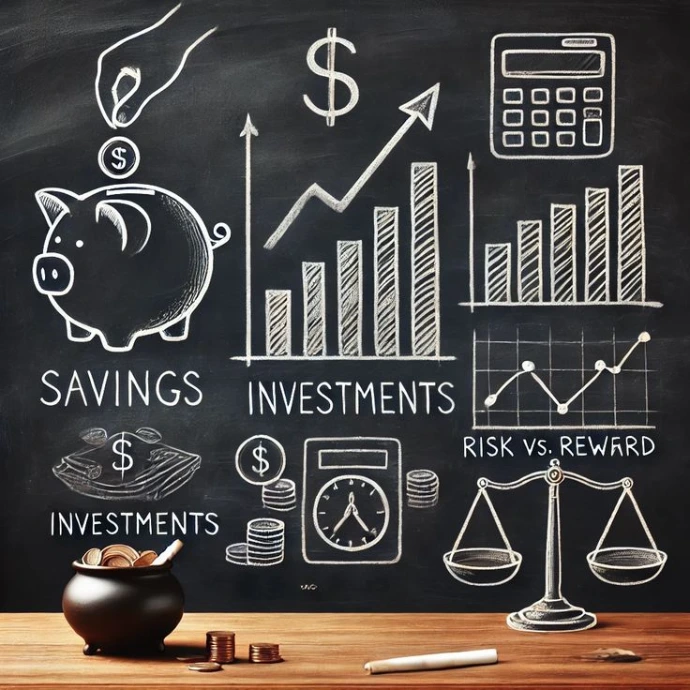
1. The Debt Trap (Personal Harm)
The most common way finance hurts people is through predatory lending and excessive debt.
High Interest Rates: Credit cards and payday loans can have interest rates so high that people end up paying back many times what they originally borrowed.
The Cycle of Poverty: When low-income individuals are forced to use debt for basic needs (like groceries or medical bills), they can fall into a "debt spiral" where they are never able to save or build wealth.
2. Systemic Crashes (Global Harm)
Because the global financial system is so interconnected, a mistake in one area can cause the entire world economy to collapse.
The 2008 Crisis: This is the most famous example. Financial institutions took massive risks with "subprime mortgages" (loans given to people who couldn't afford them). When those loans failed, it triggered a global recession, leading to millions of people losing their jobs and homes.
"Too Big to Fail": Some banks are so large that if they fail, they would destroy the economy. This often forces governments to use taxpayer money to "bail them out," which many see as unfair.
3. Increasing Inequality
Finance often benefits those who already have money more than those who don't.
The Wealth Gap: People with capital can invest in the stock market and watch their wealth grow automatically. People without capital must trade their time for money (wages), which grows much slower.
Access Barriers: Poor communities often lack access to traditional banks and are instead forced to use expensive services like check-cashing stores, making it "expensive to be poor."
4. Short-Term Thinking
The financial world is often obsessed with quarterly profits (how much money was made in the last 3 months).
Ignoring the Long Term: Companies might cut jobs, reduce product quality, or ignore environmental damage just to make their stock price look better for investors today.
"Financialization": This is when a company cares more about moving money around and playing with stocks than actually making a good product or serving its customers.
Comparison: The Good vs. The Bad
| Feature | The "Good" Side | The "Bad" Side |
| Debt | Helps you buy a home or start a business. | Can lead to a lifetime of "interest slavery." |
| Complexity | Creates advanced ways to manage risk. | Hides dangers that lead to market crashes. |
| Investment | Funds new medicine and technology. | Can prioritize quick profits over the planet. |
| Banks | Keep your money safe and accessible. | Can use your money for risky bets that require bails-outs. |
The Takeaway: Finance is like electricity. It can light up a city and power your home, but if it isn't regulated and handled with care, it can cause a fire.
BEST APP TO LEARN ABOUT FINANCE
1. Best for General Education: Khan Academy
If you want to understand the theory (how interest works, what inflation is, how taxes are calculated) without being pushed to spend money, this is the gold standard.
What you learn: Complete courses on "Financial Literacy" including car buying, housing, and saving.
Cost: 100% Free.
Best for: Students or anyone starting from zero.
2. Best for Stock Market & Investing: Zerodha Varsity
Specifically designed for beginners, this app breaks down complex stock market concepts into "bite-sized" cards and modules.
What you learn: Technical analysis, fundamental analysis, and how to pick stocks.
Cost: Free.
Best for: People who want to understand how the stock market actually functions before they put money in.
3. Best for Money Management: YNAB (You Need A Budget)
YNAB is more than an app; it's a philosophy. It teaches you how to "give every dollar a job" so you don't overspend.
What you learn: The discipline of budgeting and how to break the "paycheck-to-paycheck" cycle.
Cost: Paid (subscription), but offers a free trial (students often get a year free).
Best for: People who have money but don't know where it’s going.
4. Best for Learning by Doing: Acorns
Acorns is a "micro-investing" app that rounds up your daily purchases (like a coffee) to the nearest dollar and invests the spare change.
What you learn: How small, consistent investments grow over time (Compound Interest).
Cost: Small monthly fee.
Best for: People who find investing scary and want a hands-off, automated way to start.
Comparison at a Glance
| Goal | Recommended App | Key Strength |
| Understand the basics | Khan Academy | Academic and zero cost. |
| Master the Stock Market | Zerodha Varsity | Clear, high-quality lessons. |
| Stop overspending | YNAB | Focuses on habits and discipline. |
| Start investing small | Acorns | Automatic and beginner-friendly. |